Every summer in India brings with it a familiar rhythm—long sunny days, bustling kitchens, and the unmistakable aroma of spices being roasted and ground. It’s the season when raw mangoes flood local markets, and households across the country begin one of their most cherished culinary traditions: pickle making.
For generations, families have gathered to prepare large batches of pickles that last the entire year. These are not just condiments—they are heirlooms of taste, patience, and preservation. The process is thoughtful and deliberate: mangoes are cut, salted, sun-dried, and blended with spices, then submerged in oil to mature over time. Each jar captures the warmth of summer and carries it through every season.
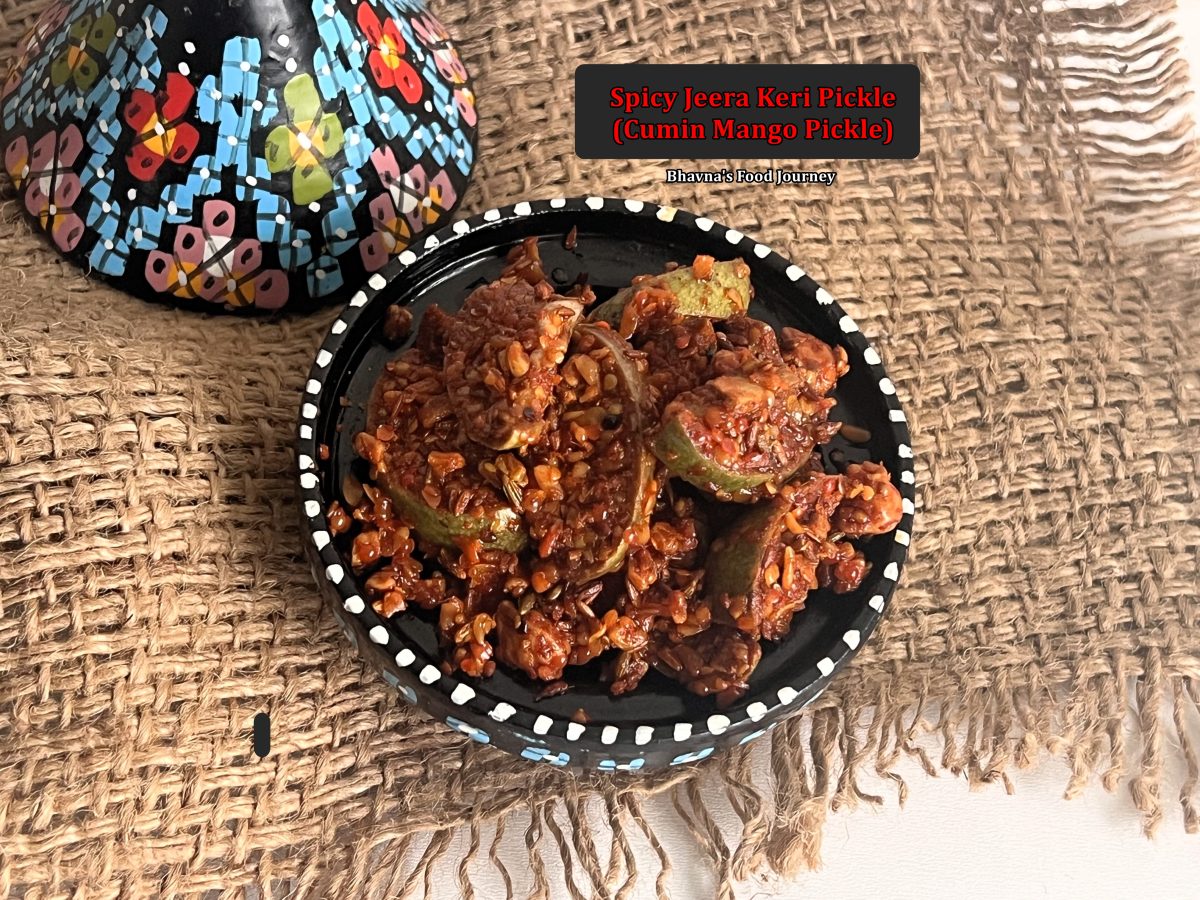
Among the many regional varieties, Jeera Keri Pickle stands out for its bold, earthy flavor. The combination of raw mangoes, fenugreek, roasted cumin, and aromatic spices creates a pickle that is both tangy and deeply spiced—perfect alongside simple meals like dal and rice or stuffed parathas.
Ingredients
• 3 raw mangoes, cut into slightly long slices
• 1 tbsp coarse salt
• 1 tsp turmeric powder
• 1/4 cup brown chana
• 1/4 cup methi (fenugreek) seeds
• 1 cup methi no masala (recipe)
• 4 tbsp roasted cumin powder (coarse)
• 1 tbsp fennel seeds
• 1/4 tsp asafetida (hing)
• Salt to taste
• Oil (enough to submerge pickle)
Procedure
Step 1: Prepare the mangoes
Cut raw green mangoes into your desired size—I prefer slightly long slices. Rub them with coarse salt and turmeric powder, then leave them aside overnight. This helps draw out moisture and enhances flavor.
Step 2: Soak the legumes and seeds
Soak methi seeds and brown chana separately in water overnight.
Step 3: Drying process
The next morning:
• Spread the mango pieces on a clean cotton cloth and sun-dry for 2–3 hours, or air-dry for 5–6 hours until dry to the touch.
• Drain the soaked methi seeds and brown chana, then spread them on a cloth to dry as well. Ensure there is no surface moisture (about 5–6 hours).
Step 4: Prepare the cumin powder
Dry roast cumin seeds until slightly browned, then crush them into a coarse powder.
Step 5: Mix the pickle
In a large, clean, dry bowl, combine:
• Dried mango slices
• Brown chana
• Fenugreek seeds
• Methi masala
• Roasted cumin powder
• Fennel seeds
• Asafoetida
• Salt to taste
Mix everything thoroughly. Taste and adjust salt if needed. Cover and let the mixture marinate overnight.
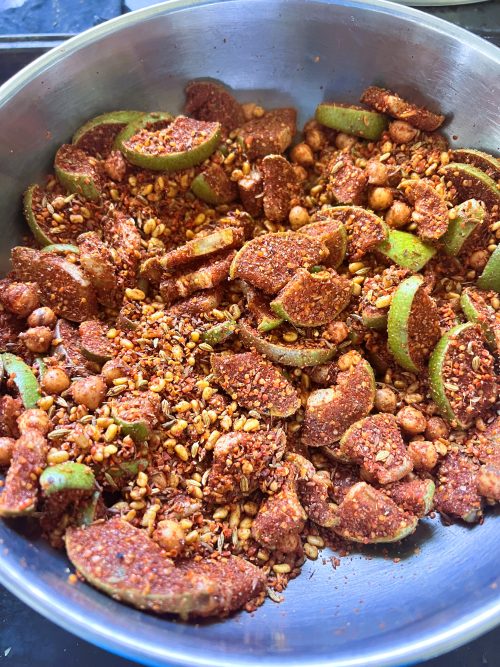
Step 6: Prepare the oil
Heat oil in a pot until it reaches a smoking point. Turn off the heat and allow it to cool completely.
Step 7: Assemble the pickle
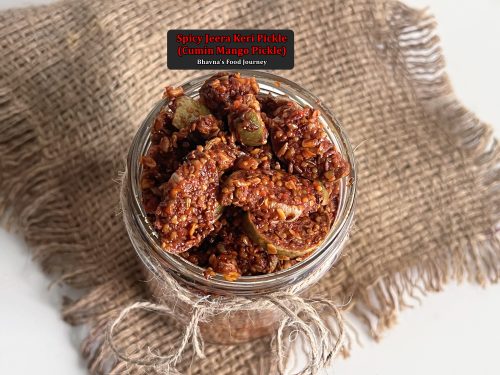
The next day, transfer the pickle mixture into a clean, dry glass jar. Press it down gently to pack it tightly. Slowly pour the cooled oil over the mixture until the oil level rises above the pickle.
Seal the jar with a lid.
Step 8: Maturation
Leave the jar at room temperature for 5–6 days to allow the flavors to develop. After that, store it in the refrigerator.
Tips for Storage
Always ensure that the pickle remains submerged under the oil layer. When serving, use a clean, dry spoon to avoid introducing moisture, which can spoil the pickle.
This simple yet time-honored recipe reflects the essence of Indian summers—resourceful, flavorful, and deeply rooted in tradition. A spoonful of this pickle can instantly elevate a meal, bringing with it the taste of sunshine preserved in a jar.
This You can also check out many pickle ideas on my website.
Thank you for visiting my website. Until next time!
You can follow me on social media using any of the link below.
Facebook Bhavna’s Food Journey
YouTube Bhavna’s Food Journey
Twitter @BhavnasFoodJrny
Pinterest Bhavna’s Food Journey
Instagram Bhavna’s Food Journey


